Maple's Q3 2025 report highlights another quarter of exceptional growth, with AUM up 66%, active loans rising 45%, and revenues reaching new highs. Maple continues to solidify its position as the leading onchain asset manager, driven by syrupUSDC(T)'s strong adoption and expanding integrations across DeFi.
This market report was prepared in collaboration with our partners OAK Research.
We've also built a dashboard with Token Terminal that highlights all the key metrics in a concise, easy-to-digest format. Link here
Maple's Key Metrics – Q3 Performance
Maple's AUM Performance
This result builds on an already exceptional trajectory: +54% in Q1 and +257% in Q2. By the end of the third quarter, Maple had already surpassed its initial year-end target of $4 billion AUM. As a result, management has revised the objective to $6 billion AUM by year-end.
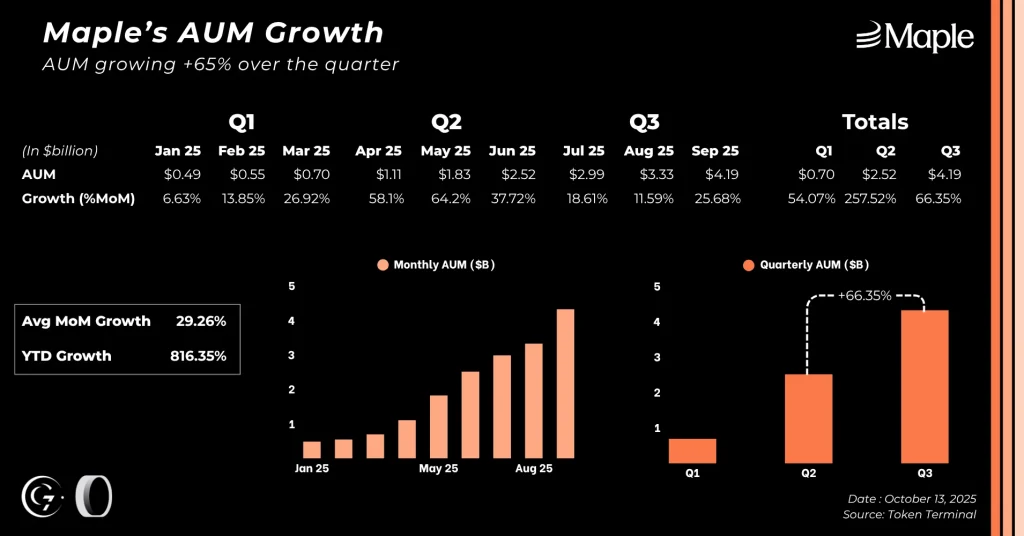
To achieve this target, Maple must maintain an average monthly growth rate of 11.4% over the remaining months. Given the protocol's track record of delivering ~29% monthly growth year-to-date, this new target appears within reach.
It is particularly impressive to observe such growth given that Maple allocates only 5 to 10 million dollars annually in incentives, a fraction of what many other DeFi protocols spend to attract deposits. Maple remains one of the few protocols generating positive cash flows, even after accounting for incentive distributions.
Maple's Active Loans Performance
As an onchain asset manager focused on institutional credit markets, Maple's revenue model is primarily driven by interest payments from institutional borrowers. Accordingly, the performance of active loans is a critical metric alongside AUM.
As in prior quarters, loan origination growth lags behind AUM expansion. As highlighted in the previous quarterly report by Martin de Rijke, Head of Growth, this lag is both structural and expected.
- Deposits vs. Loans: Capital inflows from depositors can be executed within minutes, while institutional loan originations of comparable scale require extensive due diligence, legal documentation, and negotiation.
- Liquidity Buffer: Maple maintains a liquidity buffer of approximately $200 million to support immediate withdrawals by depositors.
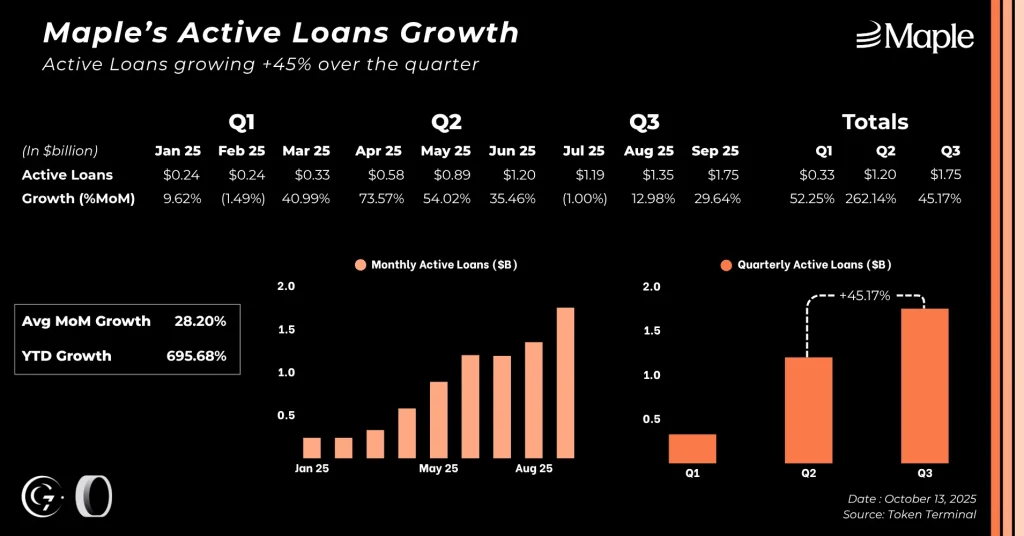
Despite this structural gap, Maple's active loan book has continued to expand at a strong pace, with an average monthly rate of 28.1% and an impressive year-to-date increase of 695%, supporting revenue growth and strengthening the protocol's positioning in institutional lending.
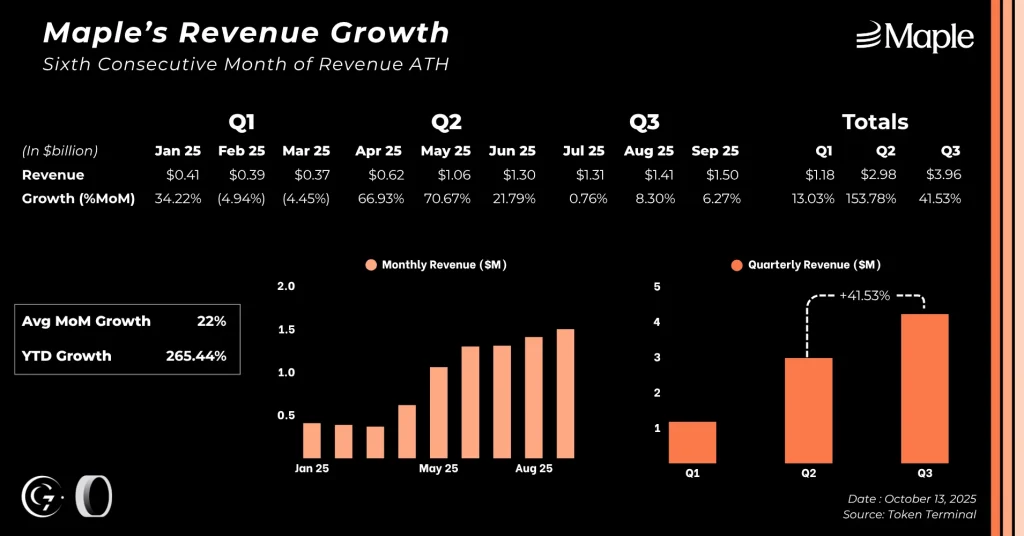
Maple's Revenue Growth and Monetization Rate
Revenue for Q3 reached $4 million, or roughly $16 million annualized, with Maple showing no signs of slowing down. The quarter ended with a monthly revenue of $1.5 million, marking the sixth consecutive monthly ATH.
At the current 20% MoM growth rate, Maple would reach approximately $30 million in annualized revenue by year-end, which aligns with the team's internal target. Based on the current market cap, this would imply a P/S ratio of around 14.
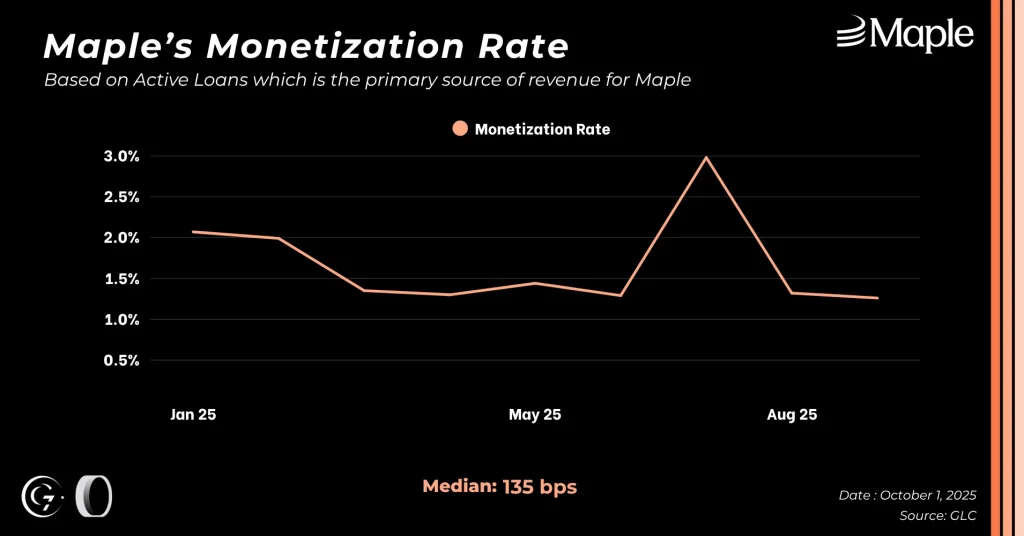
Looking at the monetization ratio based on active loans, which are Maple's primary source of revenue, the ratio has remained relatively stable, except in July when active loans declined. The median stands around 135 bps, with Maple ending the quarter at 126 bps.
syrupUSDC Q3 Relative Performance
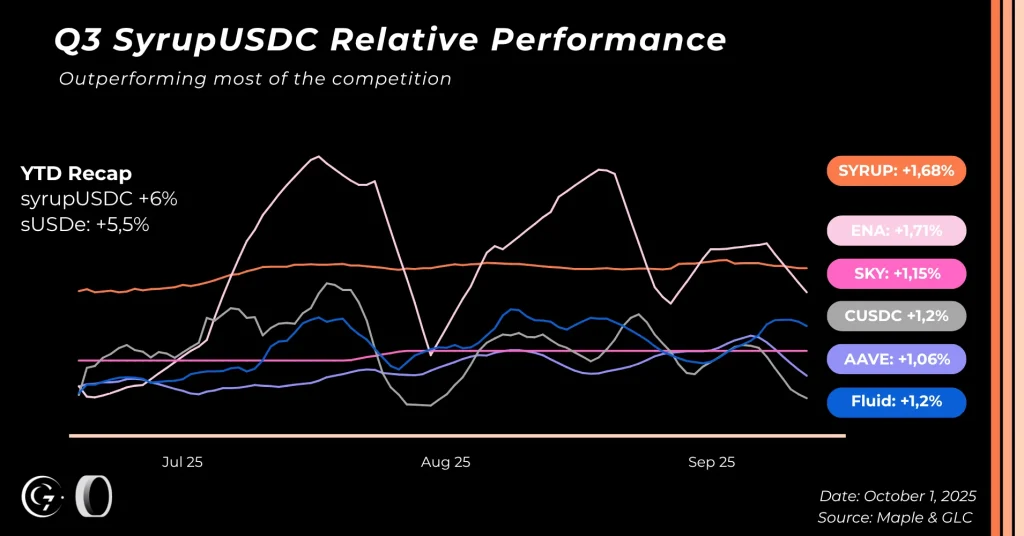
Maple's core product, syrupUSDC, delivered strong performance once again this quarter. When comparing the returns of investing an equal dollar amount at the beginning of Q3, syrupUSDC outperformed its peers, delivering a 1.6% return over the period. For comparison, Aave's yield, often used as a benchmark, returned around 1%. Obviously, it's a different product, it's normal to have such a difference.
Yield Stability and Risk-Adjusted Performance
This quarter marked another strong performance for syrupUSDC, which continues to position itself as one of the most reliable and efficient yield-bearing dollar in DeFi.
What stands out even more is that syrupUSDC has now outperformed Ethena's sUSDe year-to-date, delivering around 6% compared to 5.5%, while remaining more stable throughout the market. Although sUSDe is widely viewed as one of the best-performing yield-bearing dollar, syrupUSDC has quietly surpassed it this year combining competitive returns with consistency.
Volatility for syrupUSDC was only 0.24% this quarter, compared to 1.81% for sUSDe, underscoring how smooth and predictable its return profile has been. This blend of high yield, low volatility, and growing adoption continues to strengthen syrupUSDC's position as one of the most trusted yield assets in DeFi.
syrupUSDC Risk Premium is decreasing
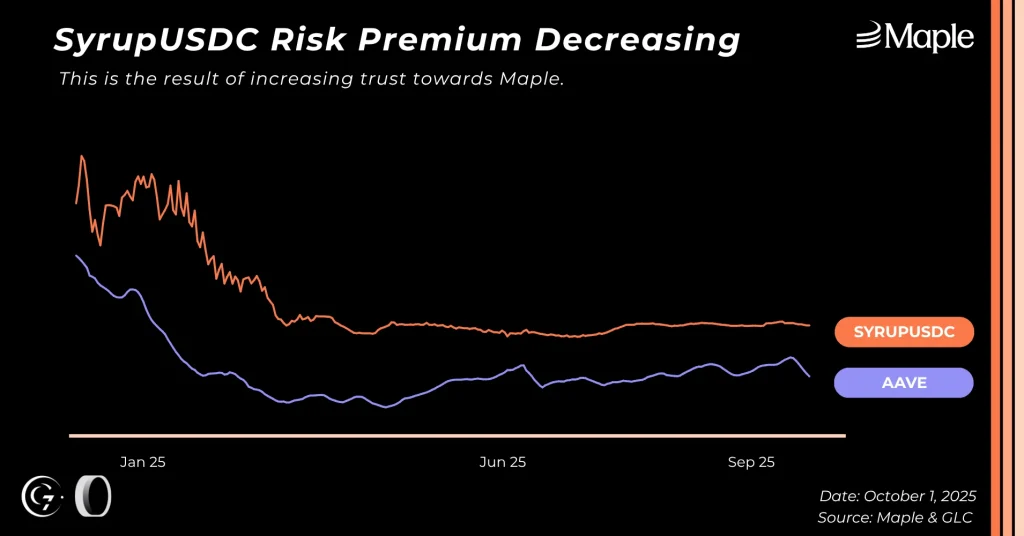
We highlighted this at the end of our Q2 report in the discussion section with Martin, Head of Growth at Maple, and it has indeed proven true in Q3: the yield premium continued to decline. It appears to be a very positive thing for Maple.
Maple's Q3 Product Performance
As the largest onchain asset manager, Maple's objective is to build a comprehensive suite of asset management products designed to support a wide range of assets, both those already available and those expected to be introduced in the near future.
Currently, Maple's offering centers around three flagship products: Maple Institutional, the BTC Yield product, and syrupUSDC(T), which exists in two versions: syrupUSDC and syrupUSDT.
Consistent with previous quarters, the majority of Maple's growth in Q3 was driven by syrupUSDC(T), the protocol's core yield-bearing dollar. The key difference this quarter was the resurgence of syrupUSDT, fueled by the long-awaited launch of Plasma, which has significantly increased demand for the USDT version.
Maple's core product: syrupUSDC(T)
As previously discussed, syrupUSDC(T) is Maple's flagship product. It is a yield-bearing dollar, available in two versions (USDT and USDC), that allows depositors to earn a high and consistent return through a liquid asset that can be deployed across most major money markets.
The yield is generated from interest payments made by institutional borrowers. Loans issued through Maple's lending platform are typically short-term and high-yield, providing syrupUSDC(T) with a source of returns that is both elevated and remarkably stable. This structure makes syrupUSDC(T) a unique and resilient product within the DeFi landscape.
Since the beginning of the year, Maple's strategic focus has been on scaling syrupUSDC, which has experienced exceptional growth from 155 million dollars in AUM in January to more than 2.9 billion dollars as of this report. This milestone cements syrupUSDC as the third-largest yield-bearing stablecoin in the market, behind only sUSDe (Ethena) and sUSDS (Spark).
This growth has been supported by deep integrations across major DeFi protocols including Morpho, Pendle, and Euler, as well as by Maple's ongoing multi-chain expansion.
syrupUSDC is now live on Ethereum, Solana (since Q2) and Arbitrum (since Q3). This cross-chain presence is a major strategic advantage. It expands access to institutional-grade yield for new users while enabling existing users to seamlessly navigate and capture the most attractive DeFi opportunities across ecosystems.
At the time of writing, the total supply of syrupUSDC stands at 1.44 billion, distributed across three chains as follows: 76.86% on Ethereum, 16.18% on Solana, and 6.96% on Arbitrum.
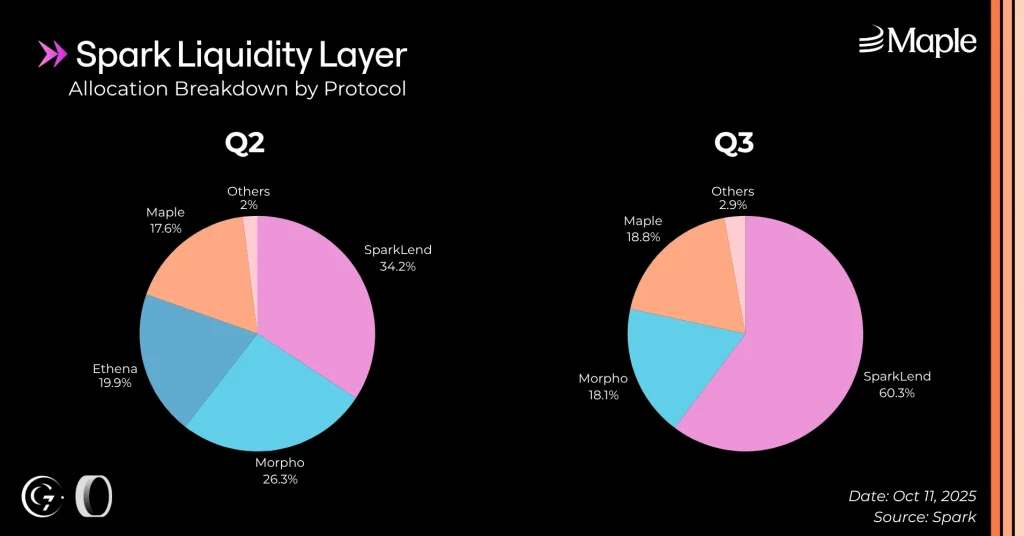
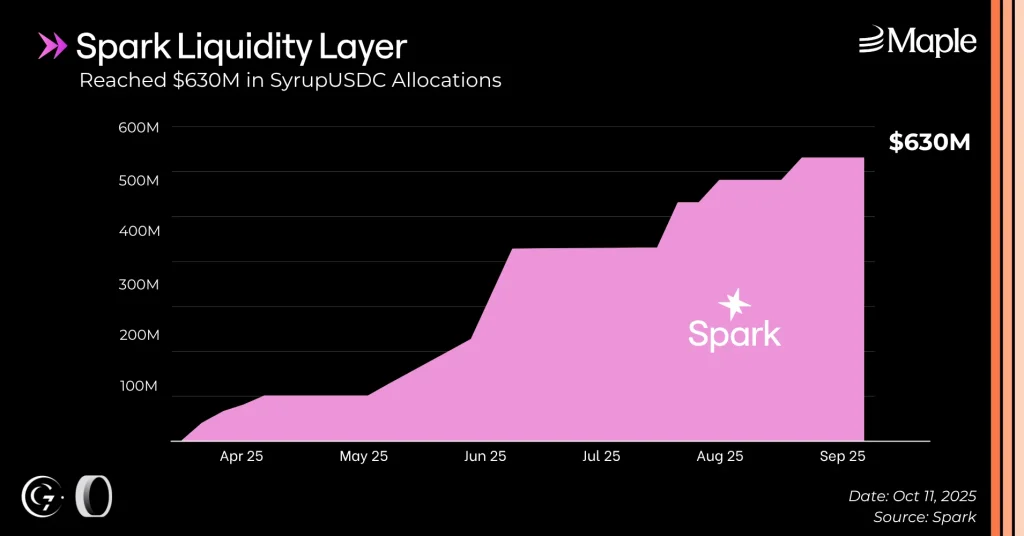
During the quarter, the share of syrupUSDC deployed across Ethereum-based money markets such as Morpho, Pendle, and Euler declined slightly, while Spark increased its allocation by an additional $200M into Maple's yield-bearing dollar.
Spark's total allocation now stands at $630M. syrupUSDC currently accounts for 18.79% of the Spark Liquidity Layer, making it the second-largest position.
During the quarter, Spark fully withdrew its allocation from Ethena's sUSDe and subsequently increased its exposure to syrupUSDC. This reallocation reflects a strong vote of confidence in Maple's yield-bearing dollar and underscores its growing credibility within DeFi's institutional segment.
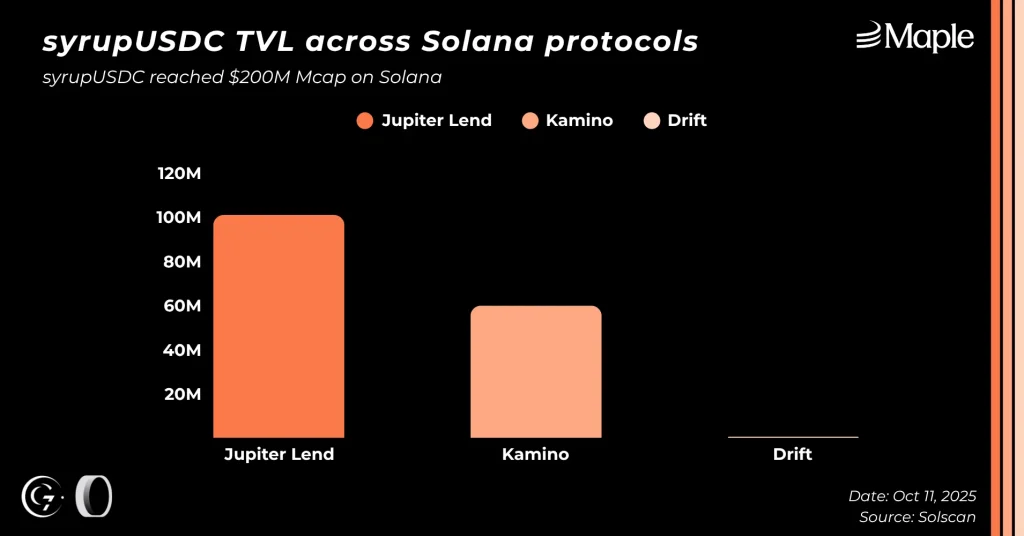
Deployed on Solana in June, syrupUSDC experienced strong growth during the third quarter, with supply increasing from approximately 50M to more than 200M, representing 16.18% of syrupUSDC's total cross-chain supply. This significant expansion was driven primarily by the launch of Jupiter Lend, which alone attracted over $100M in syrupUSDC deposits.
The growing enthusiasm on Solana is understandable, as it currently offers some of the most attractive DeFi yield opportunities for syrupUSDC holders. At the time of writing, the maximum APY exceeds 30% on platforms such as Jupiter Lend and Kamino.
Deployed on Arbitrum during the third quarter, syrupUSDC has shown impressive early growth, reaching over 100M in supply, which now represents 6.96% of syrupUSDC's total cross-chain supply.
This momentum was further supported by The DRIP (DeFi Renaissance Incentive Program), an initiative designed to stimulate DeFi activity across the Arbitrum ecosystem. The program will distribute 80 million ARB tokens over four seasons to enhance yields and liquidity across integrated DeFi protocols, including Euler, Morpho, and Aave.
The campaign has already delivered strong results for syrupUSDC, attracting approximately 111.5 million dollars in TVL through DRIP-related incentives across multiple lending/borrowing markets, most notably on Morpho and Fluid.
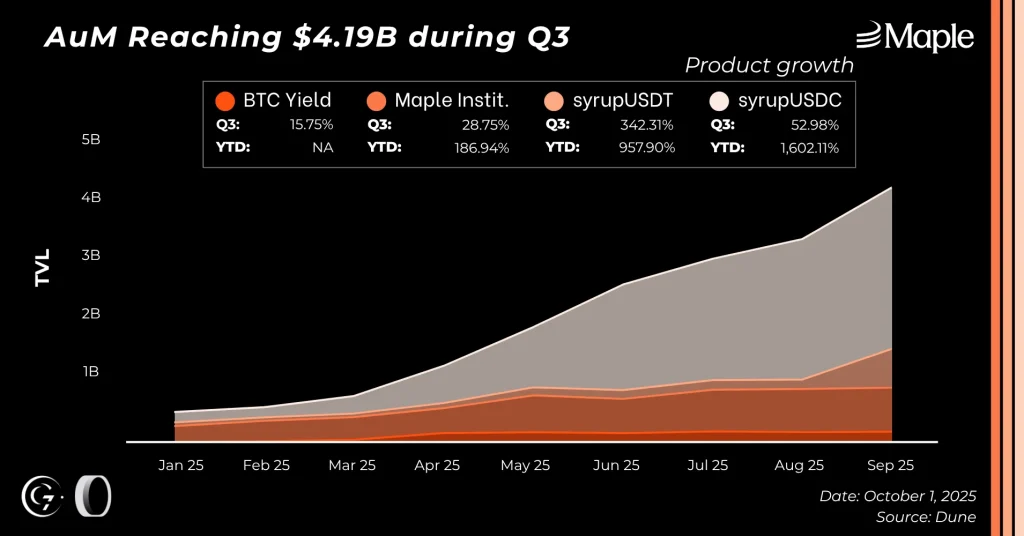
While syrupUSDC delivered another strong performance this quarter, it was syrupUSDT that truly stood out. The turnaround was driven by the highly anticipated launch of Plasma, a protocol backed by Tether, which provided the ideal foundation for Maple to reintroduce the USDT version of its yielding dollar. syrupUSDT grew by 342.3% during the quarter, rising from 143.82 million dollars to 636.15 million dollars in AUM, making it Maple's fastest-growing product in Q3.
At the time of writing, approximately 348 million dollars of syrupUSDT are deployed on Plasma, accounting for 46% of syrupUSDT's total supply.
Maple Institutional
Maple Institutional is the permissioned branch of Maple, designed to provide authorized counterparties with access to overcollateralized lending opportunities. The yield generated for lenders comes from interest payments made by institutional borrowers, with each borrower undergoing extensive due diligence and collateral evaluation to ensure credit quality and capital preservation.
- Blue Chip: This strategy targets a yield premium of approximately 200 to 400 basis points above U.S. Treasury yields on USDC. Loans are collateralized exclusively by ETH and BTC, minimizing liquidation risk and ensuring conservative credit exposure.
- High Yield: This product offers higher returns to lenders in exchange for additional risk, as it accepts a broader range of collateral assets such as weETH (Ether.Fi), HYPE, and mSOL.
While Maple Institutional is developing at a steadier pace than the permissionless syrupUSDC(T) segment, its growth remains robust. The platform recorded 28% growth in Q3 and 187% year-to-date, closing the quarter with 721 million dollars in AUM, steadily progressing toward its 1 billion dollar year-end target.
SYRUP Token Analysis: Holders, Volume, and Price Trends
As discussed earlier, Maple delivered strong growth in both protocol metrics and revenue during the third quarter. It is therefore relevant to assess whether this momentum was also reflected in the performance of its native token, SYRUP.
Investor Adoption
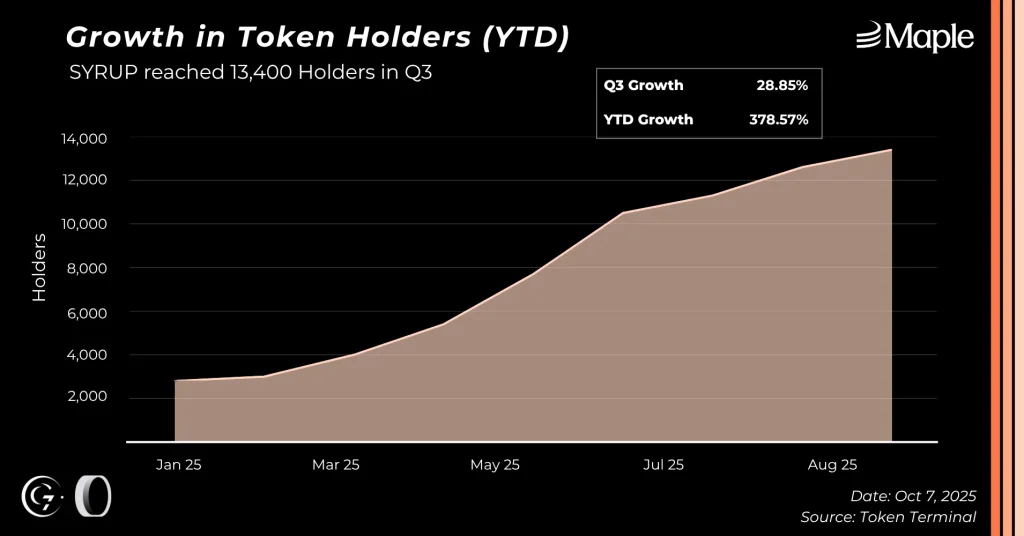
SYRUP continued to expand its investor base in Q3, recording a 28.9% increase in holders, reaching approximately 13,400 addresses by the end of the quarter. This represents a remarkable 378.6% growth year-to-date, up from only 2,800 holders at the beginning of the year.
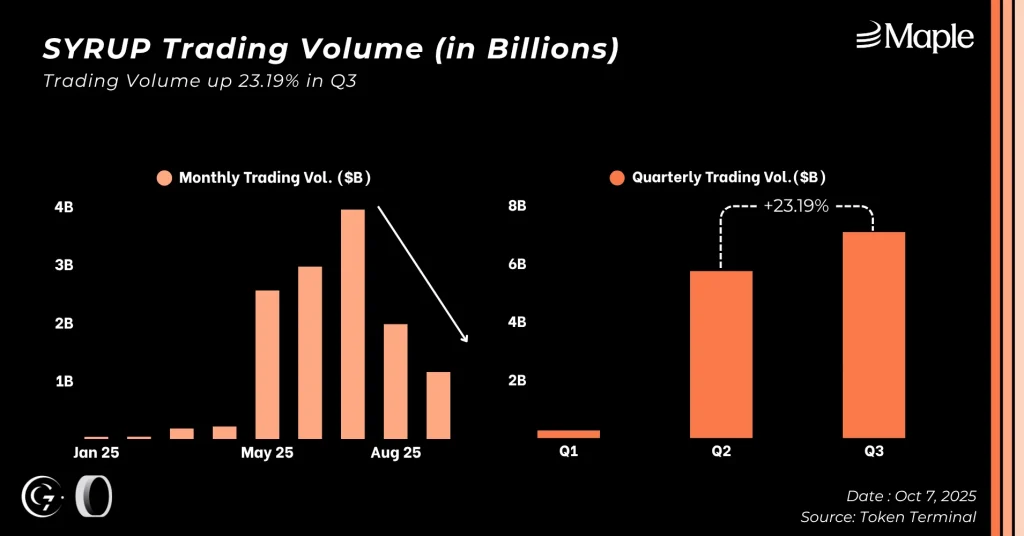
Trading activity also remained solid, with total quarterly trading volume increasing 23.2% compared to Q2. However, on a monthly basis, volumes have been trending downward since the July peak, which coincided with SYRUP's all-time high price of $0.67. This moderation in trading activity has followed the same pattern as the token's price consolidation.
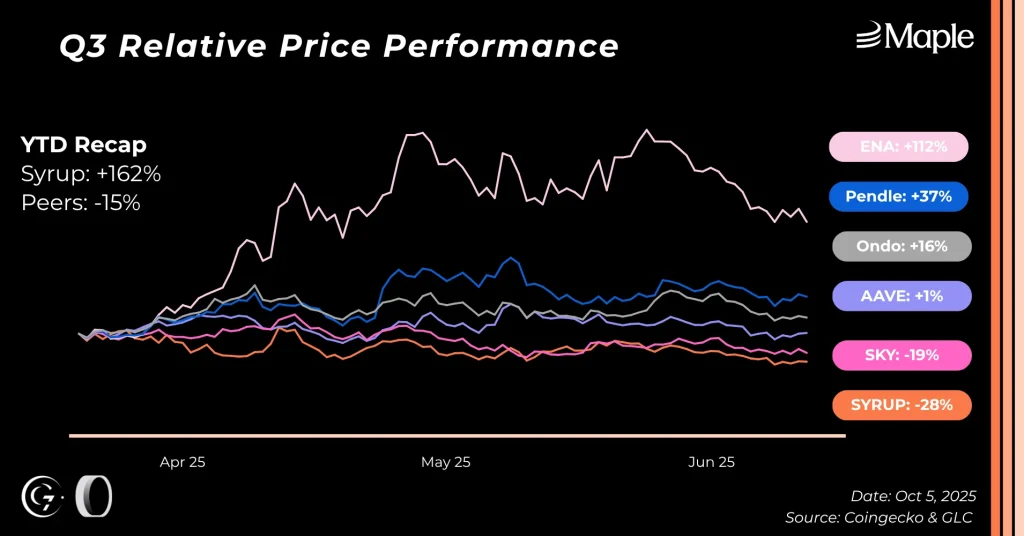
Q3 marked SYRUP's weakest quarter in terms of price performance, declining 27.98% over the three-month period and posting the lowest relative performance among its peer group. However, this short-term pullback should be viewed in context rather than in isolation.
Q3 can therefore be interpreted as a natural cooldown period following an exceptional rally in the previous quarter. Meanwhile, Maple's underlying protocol metrics, including AUM and active loans, have continued to grow sharply, reinforcing the protocol's fundamental strength.
At the time of writing, SYRUP is trading around $0.40, roughly the same level as in May, even though Maple now manages three times more AUM and active loans than at that time. This disconnect between protocol performance and token valuation suggests potential for repricing as fundamentals continue to strengthen.
We are currently working on a new investment thesis for SYRUP, incorporating the protocol's recent growth trajectory and its anticipated expansion in the coming quarters.
Key Events for Maple during Q3 2025
In this section, we will review the key announcements and developments from Maple during the third quarter that have not yet been covered in this report. As you will see, the team has continued to build relentlessly and execute consistently on its long-term vision.
Token Transparency Framework – July 2
On July 2, Maple joined Blockworks' Token Transparency Framework, a new initiative aimed at enhancing disclosure standards across crypto industry.
This is a strong transparency initiative by Maple, once again underscoring their commitment to setting industry standards and driving positive change within the space.
Expansion in Asia – July 25
During the third quarter, Maple continued to strengthen its presence in Asia, marked by a July 25 listing on Upbit, the largest cryptocurrency exchange in South Korea.
Maple's leadership team also maintained an active presence in the region, participating as speakers at several major industry conferences. Sid Powell, Maple's CEO, spoke at East Point Seoul, while Joe Flanagan represented the company at the Global onchain Asset Summit in Singapore.
SYRUP Buyback Program – July 29
Following the significant revenue growth achieved in Q2, Maple decided in early Q3, when annual recurring revenue (ARR) stood at approximately 15 million dollars, to propose an increase in the SYRUP token buyback rate from 20% to 25%.
The proposal was announced on July 23 and subsequently approved by Maple's governance on July 29. During the third quarter, Maple generated 3.96 million dollars in revenue, allocating nearly 1 million dollars to the repurchase of its native token, SYRUP.
Given the continued growth in revenue, there is a possibility that Maple will further raise the buyback percentage in the coming quarters, reinforcing its long-term commitment to value creation for token holders.
Maple Kit launch – August 22
To further accelerate the expansion of syrupUSDC, Maple launched the "Maple Kit" on August 22. This integration toolkit allows crypto builders to onboard Maple's yielding dollar in just a few minutes or hours, a process that previously could take several days or even weeks when done manually.
syrupUSDC's expansion continues at a rapid pace, and yield sourced from the institutional credit markets via Maple will soon be available across the entire ecosystem.
Maple partners with Plasma – Sept 25
On September 25, Maple expanded to one of the most talked-about chains of the moment: Plasma (@PlasmaFDN).
Plasma is an EVM-compatible Layer 1 blockchain designed specifically for the rapidly growing stablecoin market. Its goal is to replace centralized and costly networks like Tron by offering lower transaction fees, higher scalability, deeper liquidity, and stronger security.
At the time of writing, approximately 348 million dollars of syrupUSDT are deployed on Plasma, accounting for 46% of syrupUSDT's total supply.
Interview with Martin de Rijke
As part of our quarterly report, we spoke with Martin de Rijke, Head of Growth at Maple, to discuss the protocol's strong Q3 performance, recent developments, and strategic outlook for the months ahead.
Despite a bullish market environment that typically weighs on DeFi activity, Maple delivered strong growth across all core metrics in Q3. The protocol's multi-chain strategy proved highly effective, with particularly strong traction on Solana, where syrupUSDC became the largest yield-bearing dollar asset. Expansion to Arbitrum and Plasma also helped attract new users and boost AUM. As a result, Maple's brand perception has evolved from a solid to a leading DeFi Brand.
Martin highlighted that Maple's capital base has become significantly more stable compared to previous cycles. Outflows are now minimal, with Maple seeing only a 3% outflow during the latest market correction, quickly offset by new inflows. This stability reflects growing user confidence, enhanced by new integrations such as Pendle pools, DeFi loopings on Money Markets like Kamino and Jupiter and Perps collateral on Drift, which have expanded use cases and yield opportunities up to 30%.
One of the most notable developments for Q4 is the rapid growth of syrupUSDT, which Martin expects to surpass syrupUSDC. The partnership with Plasma is a key catalyst, unlocking large pools of idle USDT on the chain. Additionally, Maple's upcoming integration with Aave should accelerate adoption further, as USDT remains the most widely used stablecoin in DeFi.
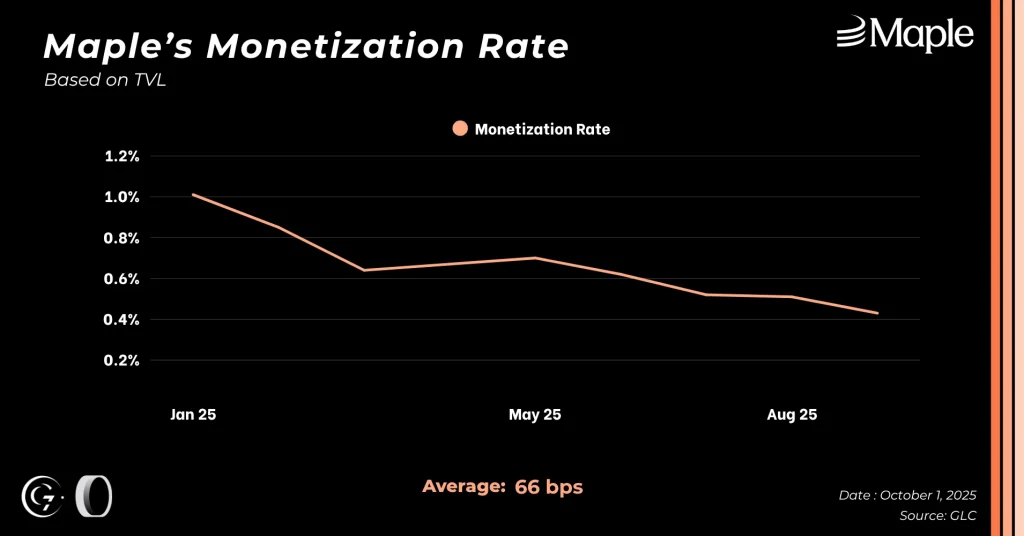
While the monetization rate declined slightly in Q3, this was mainly due to asset appreciation and overcollateralization rather than weaker performance. As Maple's reputation and trust have grown, signaling a more mature and stable lending environment. The core monetization ratio based on active loans has remained strong and consistent.
Conclusion
Q3 2025 marked another exceptional quarter for Maple, confirming its evolution from a strong DeFi brand into a leading onchain asset manager. With AUM up 66%, active loans rising 45%, and revenues reaching new highs, Maple continues to demonstrate both operational discipline and sustainable growth.
This quarter's results confirm the strength of Maple's core business model, focused on delivering institutional-grade credit products onchain while maintaining financial efficiency and positive cash flows. The success of syrupUSDC and the resurgence of syrupUSDT, together with the steady expansion of Maple Institutional, highlight the protocol's ability to scale responsibly across diverse markets and investor segments.
Beyond the financial performance, Maple has continued to execute strategically, expanding into Asia, deepening integrations across Ethereum, Solana, and Arbitrum, and forming key partnerships such as Plasma. These initiatives strengthen Maple's ecosystem and reinforce its leadership in the growing market for tokenized credit.
Looking ahead, Maple enters Q4 with strong momentum and solid fundamentals. With multiple catalysts on the horizon, including the Aave integration, and continued product innovation, the company is on track to reach its 6 billion dollar AUM year-end target and further consolidate its position as the leading onchain asset manager.
As Maple continues to expand globally, the team remains focused on its mission: bridging institutional finance and decentralized markets through transparency, discipline, and innovation.
For full access to the underlying data, check out our Quarterly Dashboard, developed with Token Terminal 👉 Available Here
Views expressed are the authors' personal views and do not constitute investment advice. See our Disclaimer & Disclosure. © GLC Research.
![Trade[XYZ] 2026 Q2 Report](/assets/img/tradeXYZ 26Q2.png)